
Mysterious Matanuska Moss Balls
Glacial Feature of the Month: Glacier Moss
Matanuska Mice
Nobody really knows what they’re in for when first coming to the Matanuska Glacier. Some expect an arctic wasteland of snow and wind. Others imagine arching ice caves rising right up to the parking lot. Yet nobody anticipates finding balls of moss rolling on the ice like boreal tumbleweed.
When scientists with a sense of humor discovered these on the Matanuska, they named them “glacier mice,” and the name is as fitting as it is comic. These moss balls are completely round, fuzzy, free-floating, and often travel in ‘herds’ around the glacier. They have been known to exist since the 1950s, yet science still knows very little about them.
Moss Movements
My fascination with moss began during a life-changing Ecology class in my freshman year of college. During lab sessions, we would head into the woods to observe the moss as the frost slowly melted away. On Friday afternoons, a friend and I would “borrow” a magnifying glass from the lab to explore the rainy spring woods of Vermont. Now, as a guide at MICA, I have the opportunity to educate people about these glacier plants.
Mosses are some of the oldest groups of plants on earth. They don’t have complex root systems like trees and other typical plants. This prevents them from reaching the incredible heights or sizes of other, more “advanced” plants. This simplicity allows moss to grow in places where no other plants could dream of growing. Anywhere where there is enough water and a surface to grow on, you can be sure to find mosses thriving unassumingly in the background.

Embracing the Changes
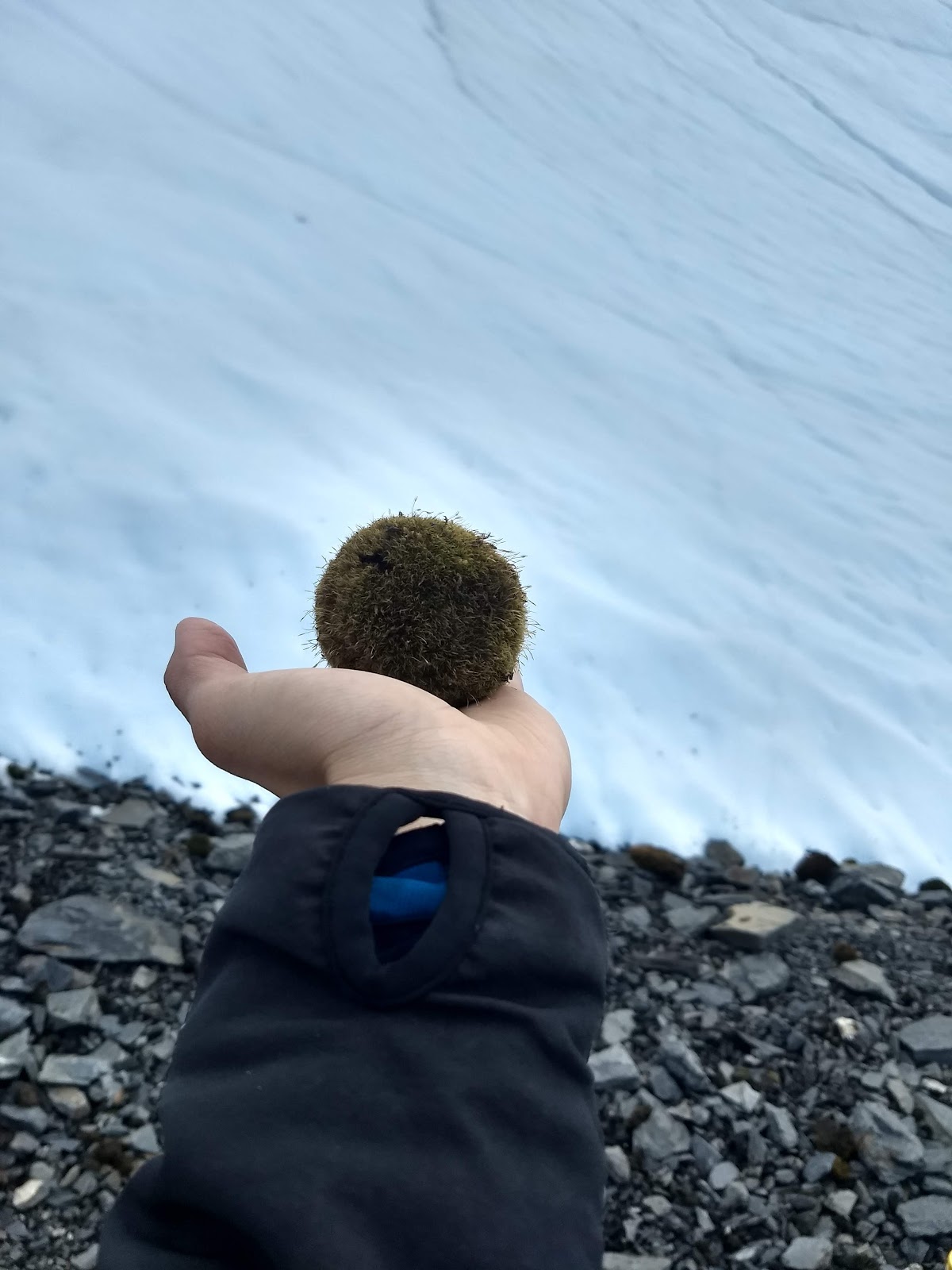
While other plants need stable ground to survive, glacier mice embrace the glacier’s constant change. They begin as tiny green fibers encircling a pebble or dust grain and grow outward. Old, dead moss serves as soil for new moss to expand. Though they typically reach only 1-2 inches in diameter before being broken up by tumbling rock and ice, I have found moss balls nearly a foot and a half across!
The moist dirt inside a glacier mouse is a rare haven for life. A single ball is much more than just one plant in an icy wilderness. Glacier mice form entire ecosystems—a vehicle for life within one rolling ball. While many moss species coexist outside, dozens of tiny invertebrate species, like water bears and worms, live within the moss ball. All these plants and animals follow the glacier’s natural changes.
As humans, we get locked into our habits and expectations. We thrive on consistency, so when life—or glaciers—change, we can become frustrated, wishing for the past. By contrast, glacier mice, which are balls of moss that travel across the ice, embrace change; they let the glacier’s shifting movement carry them to new places, allowing them to bask in the Alaskan sunshine. Perhaps these simple creatures can teach us about embracing change with more grace.
Author: Adam Gellman


