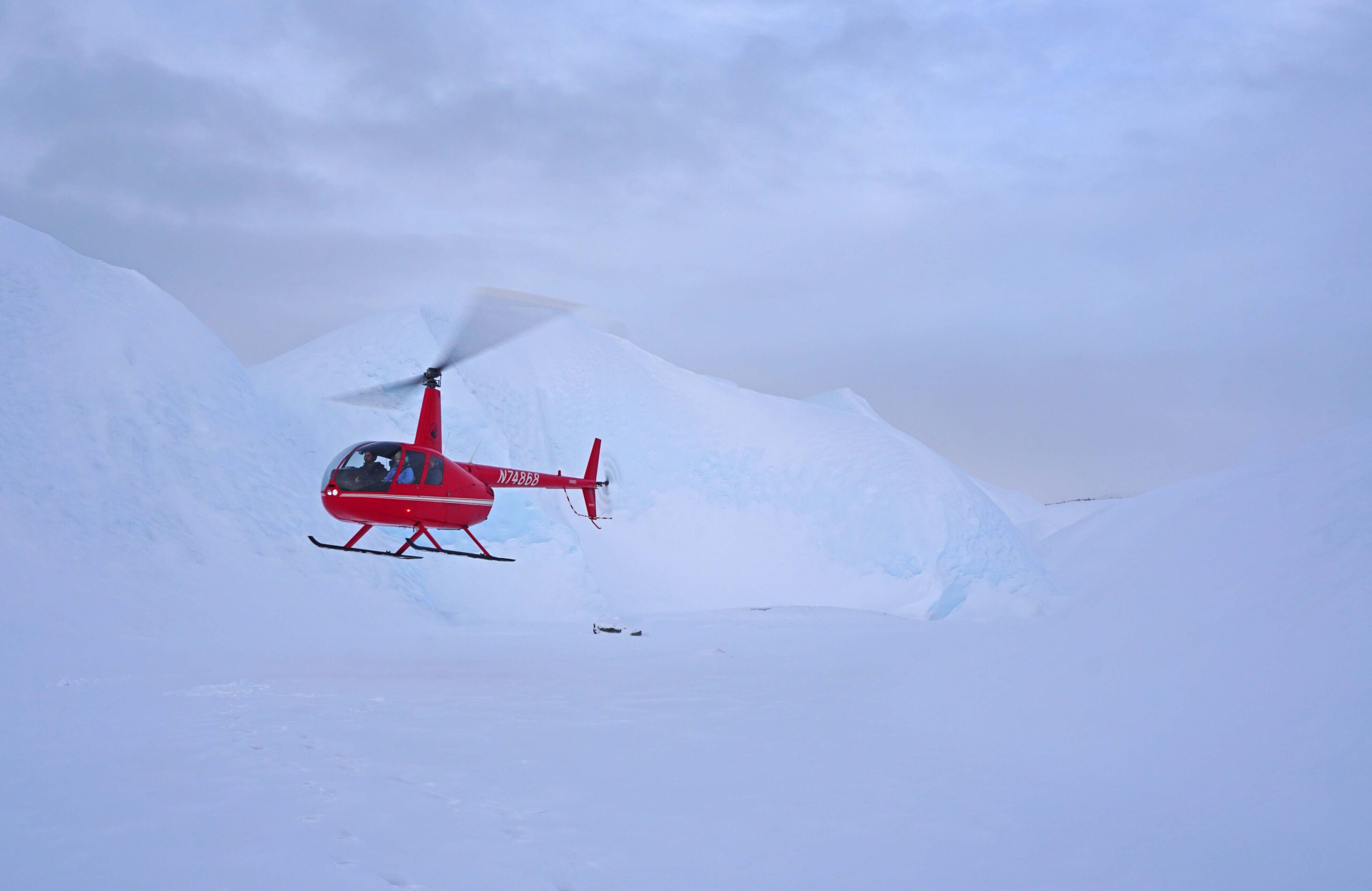
Winter Time on a Glacier

Life on a glacier is constantly changing, sometimes faster than others. During the summer, you can see glacial changes happen in a matter of hours by means of meltwater and shifting. And in the winter, the glacial world moves much more slowly, offering a different perspective on the ice.

Summertime on a Glacier
In the summer, glaciers move and change more quickly because they are in their ‘melt season’. This is when ice melts faster than it can accumulate, due to the consistently higher summer temperatures. You might see large meltwater lakes near the glacier’s toe. The water level of these lakes can rise and fall as daily temperatures fluctuate.
With more sun and warmer temperatures, there is more melt. Not only does meltwater influence the lakes, but it also influences the rate of ice shifting and carving that the glacier undergoes. Meltwater seeps into weaker facets of the glacier’s ice and begins to drill into them. This motion helps to create and shape crevasses and moulins on the glacier.
A summer walk around the glacier reveals features navigable in the morning but submerged by afternoon meltwater. Steady streams of pure glacial water from ice features may lead you into canyons and carved caverns.
While spotting blue pools and intricate natural ice features, you might hear the crash of nearby ice shearing off a face. The glacier, a river of ice, flows faster in summer, making it easier to see for ourselves how the glacier moves. Additionally, visiting in summer allows you to book a private ice climbing and luxury camping experience on the Matanuska Glacier.
Winter Glacial Flow
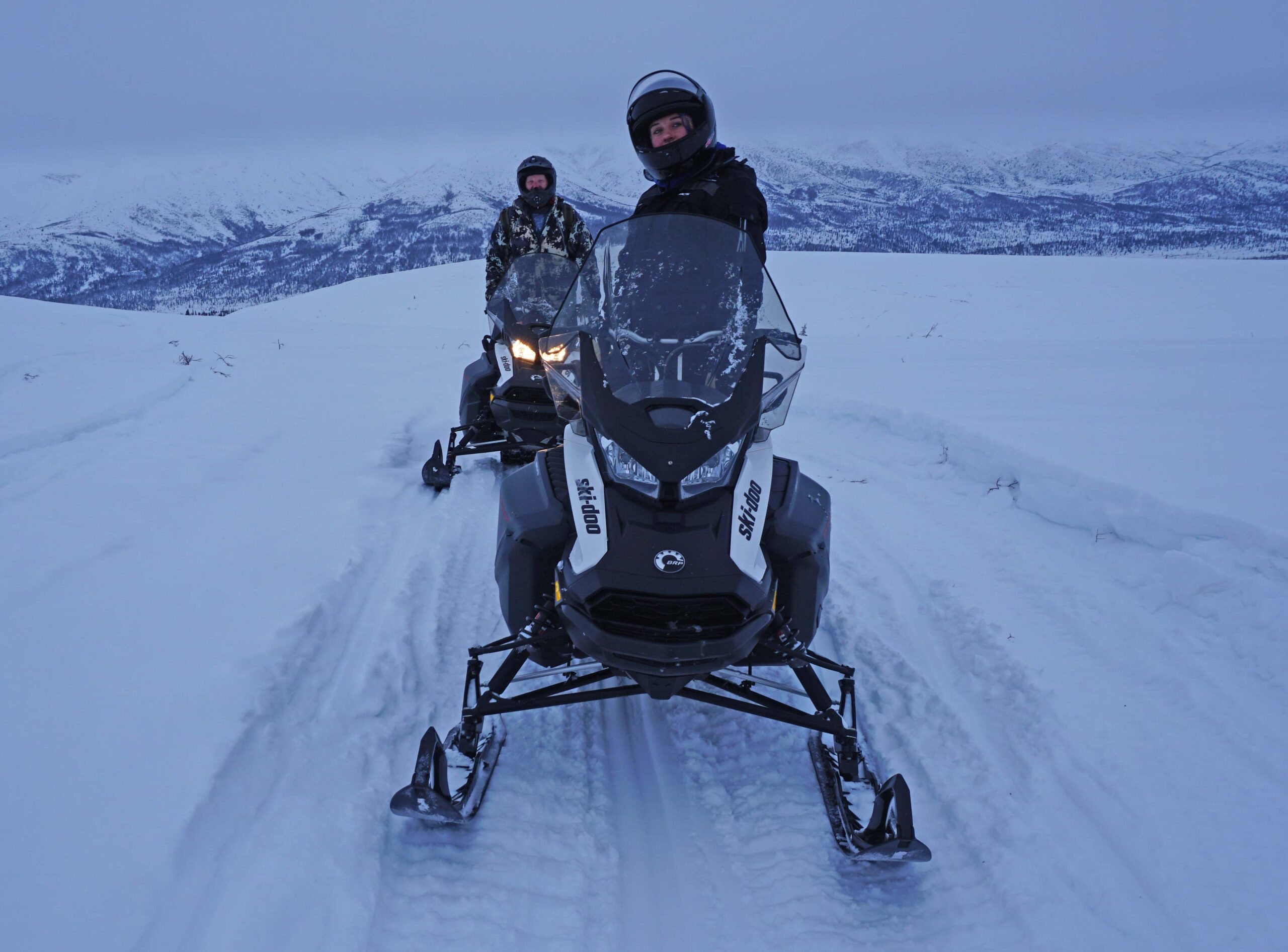
The wintertime on a glacier is a bit slower. This offers a different face of the glacier that many don’t get to see. You do have to face colder temperatures and shorter daytime hours, but they come with some fair trade-offs. In the winter, you will only experience a fraction of the people that you would in the summer months. Not as many folks are willing to enjoy the cold, and outfitters don’t operate as many tours.
You can even take a snowmobile tour out to enjoy both the powder snow and the ice. Once on the glacier, much of the meltwater is frozen. This is why going with a professional guide is so important.
The glacier is more difficult to navigate in winter, when there are more hazards you can’t see. As the ice thickens and solidifies through the winter, the blue hues really start to show. Taking a helicopter out and dropping into an ice canyon is a perfect immersion experience for getting up close and personal to blue ice.
Both seasons lend a hand to excellent photography and memorable experiences. The differences in the seasons complement each other, offering unique glacier opportunities. Catch the Northern Lights in the winter or book a private helicopter experience for the summer. Which season do you think best suits you and your crew?